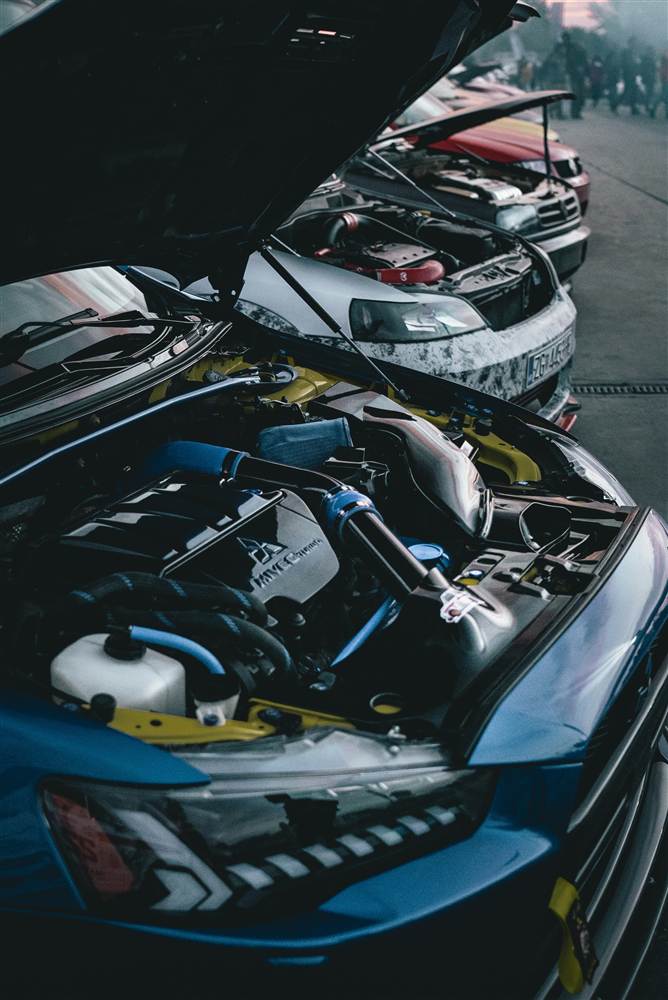
Tuning stages aren’t a legal standard — they’re industry shorthand. Exact gains vary by engine. Hardware expectations at each stage stay consistent.
Stage comparison at a glance
| Stage | Hardware needed | Typical goal | Best for |
|---|---|---|---|
| Stage 1 | Stock vehicle | ≈20–35% power; mid-range torque | Daily road cars & vans |
| Economy | Stock vehicle | Motorway / mixed mpg | Fleets & high mileage |
| Stage 2 | Intake / exhaust / cooler (road-legal) | Higher boost than Stage 1 | Modified road builds |
| Stage 3+ | Bigger turbo, fuel, clutch, custom | High power; dyno-led | Specialist builds |
Stage 1
Bottom line: software-only on a stock vehicle in good condition. More torque and power within safe limits for the factory turbo, injectors, clutch and cooling. Deep dive: Stage 1 remap Manchester.
Stage 2
Bottom line: software plus supporting hardware — often freer-flowing exhaust (UK road cars must stay emissions-compliant), intake or intercooler. Higher boost and fuel demand than Stage 1. Many drivers never need it.
Stage 3 (and beyond)
Bottom line: bigger turbo/hybrid, fuel upgrades, stronger clutch, custom mapping — often dyno-led. Higher cost and maintenance; rarely the right first step for a daily driver.
Economy / “Stage 1 eco” maps
Bottom line: not always numbered as a stage. Focused on drivability and fuel use for motorway and fleet mileage rather than peak BHP. See diesel economy remap.
Gearbox stages
Bottom line: TCUs can be mapped to match engine torque (see ECU vs TCU). That’s complementary — not a replacement for Stage 1/2/3 naming on the engine.
Which stage should you choose?
- Daily / stock car: Stage 1 or economy
- Modified intake/exhaust (road-legal): discuss Stage 1+ or Stage 2 carefully
- Big turbo builds: Stage 3 / custom only with the right hardware
Torque Lab Ltd prioritises road-legal Stage 1 and economy remapping for mobile work across Greater Manchester. Higher stages need an honest hardware plan first.