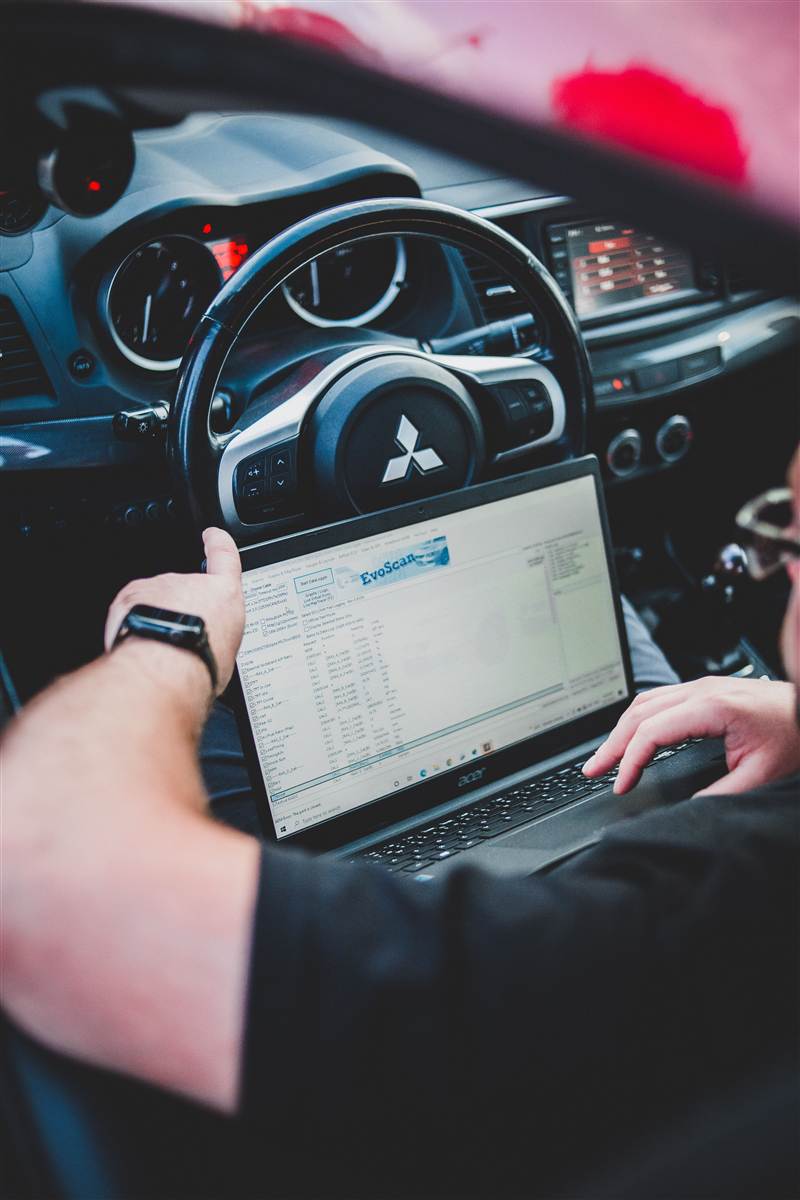
OBD stands for On-Board Diagnostics. On almost every modern car and van you’ll find an OBD-II / EOBD socket — usually under the dashboard. In remapping, “OBD mode” means we communicate with the engine ECU (or sometimes the gearbox TCU) over that port using professional flashing tools.
How OBD remapping works
- We plug into the diagnostic socket and identify the ECU
- A full original file is read and backed up
- The map is adjusted for Stage 1, economy or your agreed goal
- The new calibration is written back and checked
When the vehicle supports it, OBD is ideal for mobile remapping in Manchester — fast, clean and done at your home, workplace or depot.
When OBD mode is used
- Many petrol and diesel ECUs with unlocked or supported OBD protocols
- A large share of Stage 1 and economy remaps
- Follow-up writes after an earlier unlock (where the maker allows OBD write)
When OBD isn’t enough
Some ECUs refuse OBD write, time out, or need a deeper connection. Then we move to bench mode or boot mode. That’s normal — not a fault with your car — and we’ll explain the plan before we start.
What you should expect
Ignition on, battery voltage stable, and enough time for a careful read/write. We never skip the original backup. Compare methods in our overview: OBD, bench and boot explained.